ENG

BM

Advisory & Policy

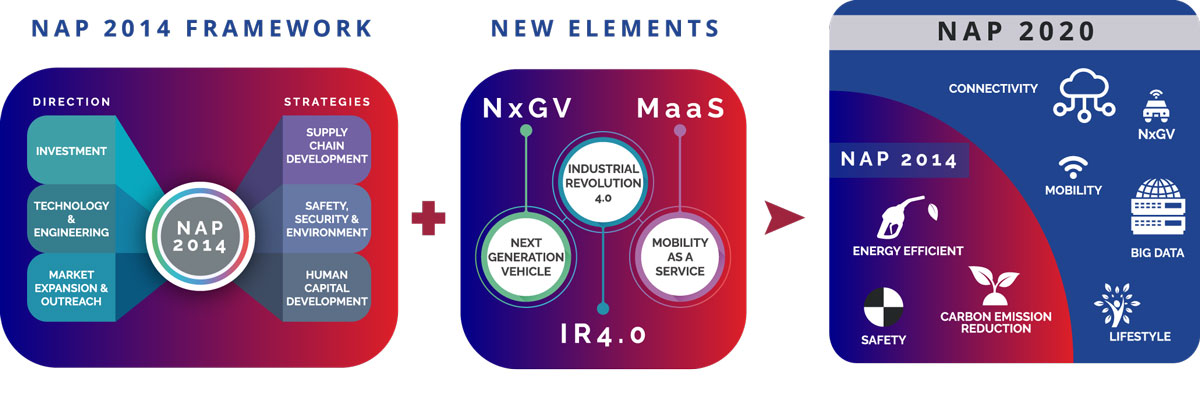
The Malaysia Automotive, Robotics & IoT Institute (MARii) supports the Ministry of Investment, Trade and Industry (MITI) by providing strategic research, policy advisory, and advocacy services for the automotive and mobility sectors. Aligned with the objectives of the National Automotive Policy 2020 (NAP 2020), MARii drives initiatives that strengthen Malaysia’s automotive ecosystem, positioning the nation as a regional leade in Next-Generation Vehicles (NxGV), smart mobility, and Industry 4.0 technologies.

Through its advisory and advocacy role, MARii empowers local automotive players
— OEMs, vendors, and SMEs—to embrace electrification, digitalisation, and
sustainable practices, fostering innovation and competitiveness to enhance
Malaysia’s economic well-being.

Overview

The automotive industry plays a significant role in transforming Malaysia into an industrialised nation, which translate into high-value economic activities, improving standards of living as well as creating higher-paying jobs. The sector creates an important impact on the development of upstream industries, such as steel and chemicals, as well as downstream industries, including IT and maintenance services.

The National Automotive Policy (NAP) was first introduced in 2006 under the Third Industrial Masterplan (IMP3) 2006-2020 to transform the automotive industry as one of the important components of our economy, It outlined key direction and strategies in preparing the local automotive players towards a more competitive and sustainable automotive industry. In 2009, the second version of the policy was introduced, to focus on enhancing the capabilities of the domestic automotive industry and create a more conducive environment for investments.

We work hand-in-hand with policymakers, industry players, and technology partners to:

01

Shape progressive automotive policies that position Malaysia as a regional hub for Next-Generation Vehicles (NxGV), Mobility-as-a-Service (MaaS), and Industry 4.0 technologies.

02

Advocate for sustainable mobility solutions, integrating circular economy principles, environmental stewardship, and low-carbon strategies to enhance competitiveness.

03

Support industry transformation, enabling local vendors, OEMs, and SMEs to embrace digitalisation, robotics, IoT, and advanced manufacturing for long-term growth.

04

Through robust advisory and advocacy, MARii accelerates Malaysia’s transition toward a future-ready automotive ecosystem, fostering innovation, investment, and inclusive economic development.

National Automotive Policy 2020
(NAP2020)

MARii’s dedication to innovation, sustainability, and workforce development isn’t just about us
– it’s about propelling Malaysia towards a brighter future.

NAP2020

Report Card

Gross
Domestic
Product

2030 :

2024 :

2023 :

RM104.2 billion

RM82.6 billion

RM79.2 billion

Export
CBU

2030 :

2024 :

2023 :

RM12.3 billion

RM2.51 billion

RM2.78 billion

Export
Components

2030 :

2024 :

2023 :

RM28.3 billion

RM13.4 billion

RM13.3 billion

Total Industry
Volume

2030 :

2024 :

2023 :

1.22 million units

816,747 units

799,731 units

Total
Production
Volume

2030 :

2024 :

2023 :

1.47 million units

790,347 units

774,600 units

Talent

2030 :

2024 :

2023 :

323,000 jobs

118,569

116,203

Talent

2030 :

Level 5 - 360

Level 4 - 660

Level 3 - 880

2024 :

Level 5 - 64

Level 4 - 159

Level 3 - 584

2023 :

Level 5 - 67

Level 4 - 162

Level 3 - 582

Realised
Investment

2024 :

2023 :

RM15.8 billion

RM6.99 billion

Commited
Localisation

2024

RM10.72 billion

2023

RM8.55 billion

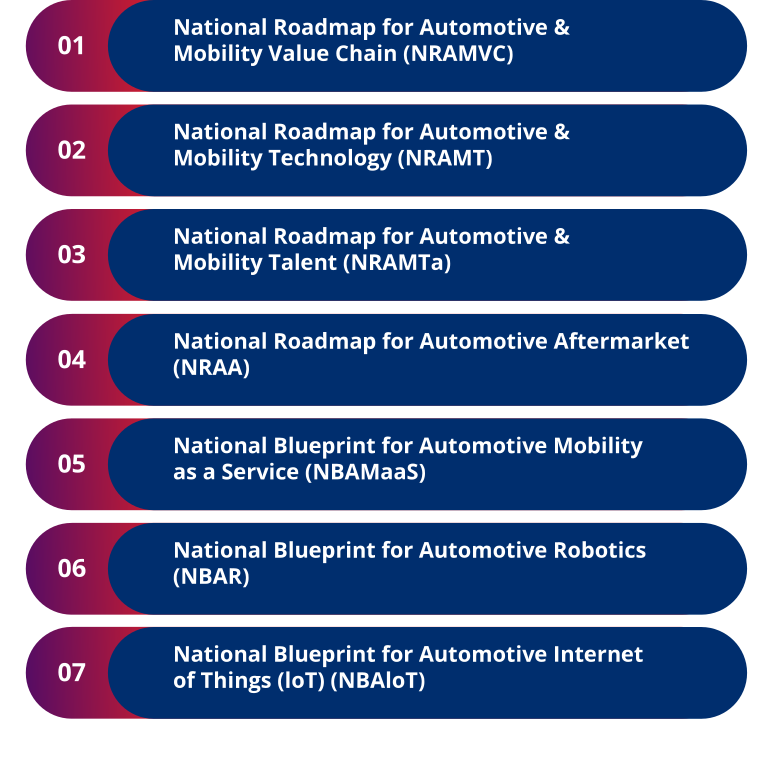
The framework of the NAP is supported by the implementation of these documents:

Customized Incentives

The National Automotive Policy (NAP) provides Customized Incentives (CI) to attract strategic investments into Malaysia, specifically in Energy Efficient Vehicle (EEV) and Next Generation Vehicle (NxGV) sectors, to further develop the local automotive ecosystem. The Government’s decision on the incentives provided depends on the level of strategic activities, such as Completely Knocked Down (CKD) investments, production volume, technology transfer, research and development activities, supply chain development, employment, export programs, and other factors.

The amount of the incentive given is subject to a Cost-Benefit Analysis (CBA) and the recommendation of the Automotive Business Development Committee (ABDC), a strategic committee chaired by the Ministry of Investment, Trade, and Industry (MITI), with representatives from:

  1. Ministry of Finance (MOF)
  2. Royal Malaysian Customs Department (RMCD)

  3. Malaysia Automotive Robotics and IoT Institute (MARii)

  4. Malaysian Investment Development Authority (MIDA)

The CI refers to incentives that enable a higher multiplier than the standard Industrial Linkage Program (ILP) ratio (greater than 1:1), resulting in greater reductions in import, excise duties, and sales taxes. These reductions consider potential benefits to the country, such as new investments, employment, and technology transfer. The CI may also consider the percentage of duty reductions on vehicles, depending on the respective companies’ strategic business plans and discussions with the ABDC.

Standard Operating Procedure (SOP) For Cost Benefit Analysis (CBA)

The purpose of this document is to define the procedure and requirements for Customised Incentives (CI) application through the evaluation of Cost Benefit Analysis (CBA). This procedure shall serve as a guide for applicants with regard to their request for tax exemption such as excise duty, import duty, or sales tax.

To become a regional leader in manufacturing, engineering, technology and sustainable development in the automotive sector

Supply Chain Integration

Malaysia as the hub for:

Export of vehicles;

  • Exports of components and spare parts;
  • Technology development related to
    automotive and mobility; and
  • Vehicle and component testing.

Local Manufacturing

Enhance local manufacturing of vehicles and components as well as promotion of remanufacturing.

Engineering Capabilities

Enhance local engineering capabilities in R&D, testing and technology development.

Latest Technology Trend

Adopt and adapt the latest technology trend through application of IR4.0 technologies.

Sustainable Development

Sustainable development of the automotive industry through application of environmental friendly products and processes which aims to reduce carbon emission etc.